Isotropic Mesh Generation: Difference between revisions
No edit summary |
No edit summary |
||
| Line 105: | Line 105: | ||
|} | |} | ||
<br><br><br> | <br><br><br> | ||
{| class="wikitable" style="text-align:center;" | {| class="wikitable" style="text-align:center;" | ||
Revision as of 09:17, 27 March 2018
Refinement Results of Sphere and Two Blades with Merging Wakes and a Symmetry Plane
-
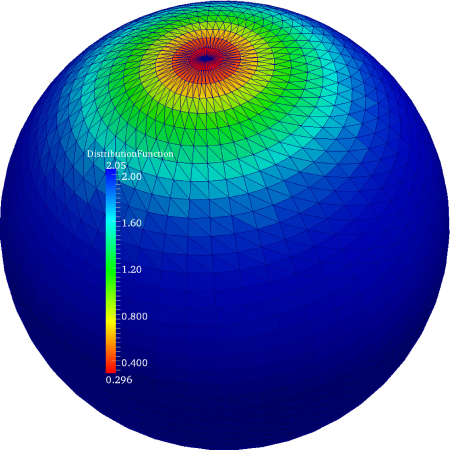
(a) Input Surface -
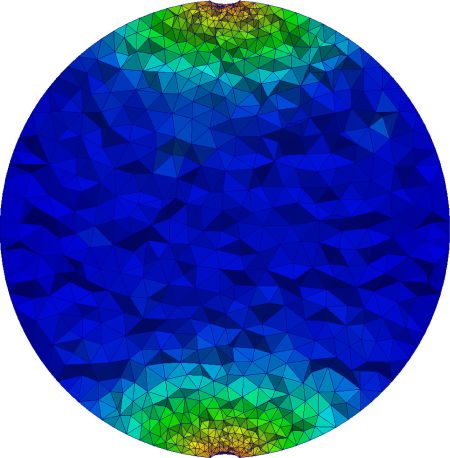
(b) cdfm: 0; #tets: 57K


-
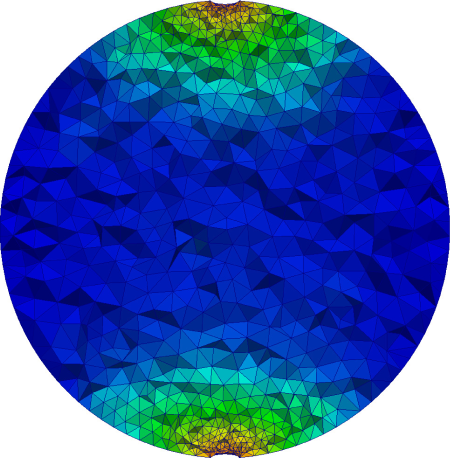
(c) cdfm: 0.2; #tets: 58K -
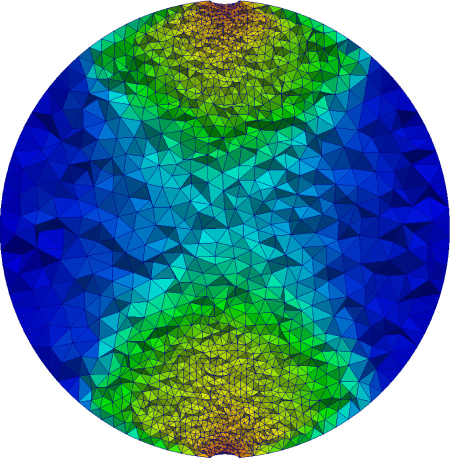
(d) cdfm: 0.6; #tets: 129K


-
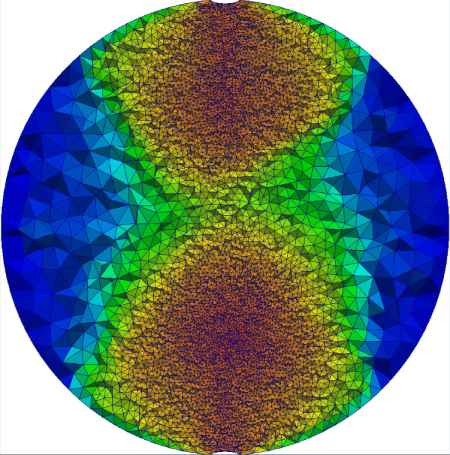
(e) cdfm: 0.8; #tets: 854K -
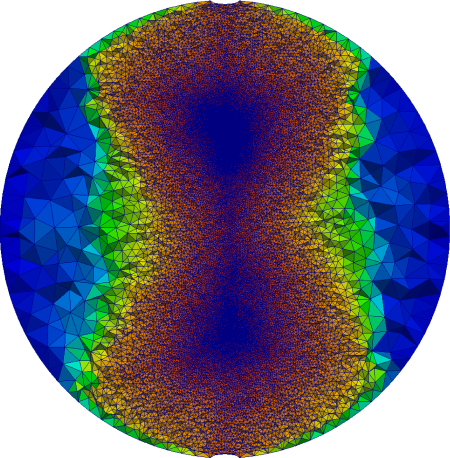
(f) cdfm: 0.9; #tets: 7.68M


Cuts of tetrahedral grids of a sphere generated for varied cdfm ∈ [0, 1]. Blue
corresponds to larger values of the distribution function. Red corresponds to smaller values
of the distribution function.
-
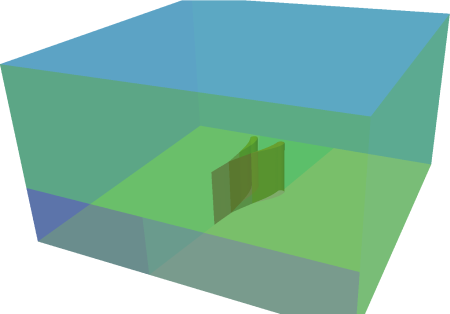
(a) Input Surface -
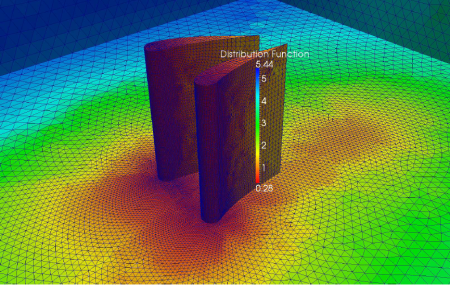
(b) Distribution function on the boundary


-
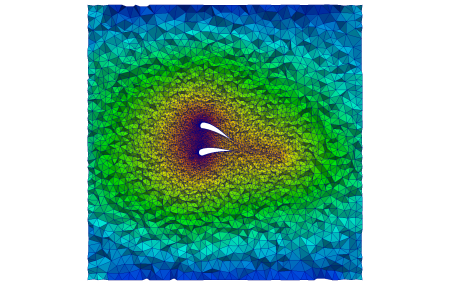
(c) cdfm: 0; #tets: 806K -
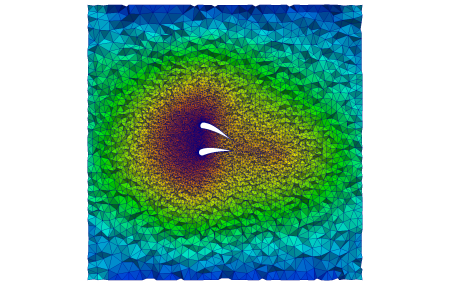
(d) cdfm: 0.1; #tets: 1.41M


-
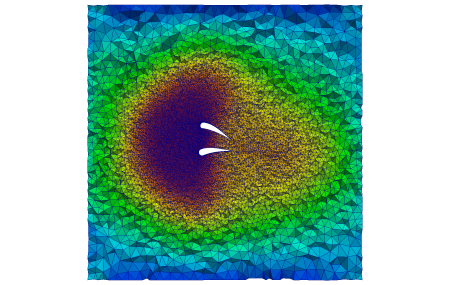
(e) cdfm: 0.2; #tets: 4.97M -
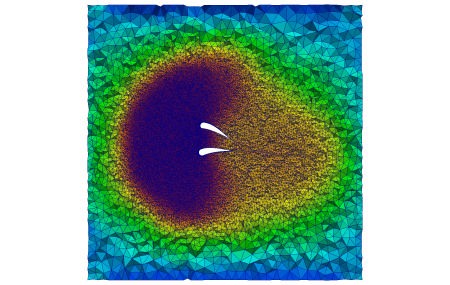
(f) cdfm: 0.3; #tets: 16.54M


Cuts of tetrahedral grids of two blades with merging wakes and a symmetry
plane enclosed in an outer boundary generated for varied cdfm ∈ [0, 1] (shown in
(c)-(f)).
The input surface is depicted in (a)-(b). The wake region is modeled as an embedded/
transparent delete surface.

Element angle distribution (in 5-deg increments) of grids of sphere, for varied
cdfm.
The dihedral angle extrema and the element count are reported for each grid.

Element angle distribution (in 5-deg increments) of grids of two blades with
merging wakes and a symmetry plane enclosed in an outer boundary, for varied cdfm.
The
dihedral angle extrema and the element count are reported for each grid.
Surface Meshes and Parameters Used to Refine Nacelle Engine, Rocket, and Launch Vehicle with Two Boosters (lv2b)


- Surface grid of an aircraft nacelle with engine inside a section of wind tunnel.
- #points: 27184; #triangles: 54360


- Surface grid of a rocket with engine, nozzle and transparent internal data surfaces inside flow field.
- #points: 20228; #triangles: 40448


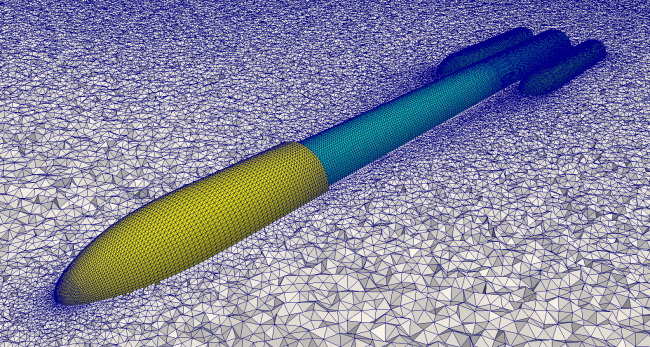
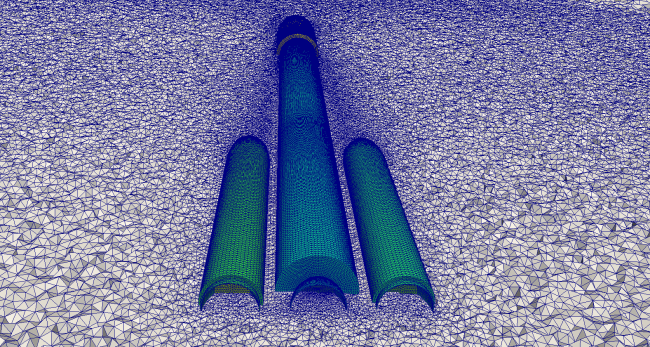
- Surface grid of a launch vehicle with solid boosters inside flow field (Lv2b).
- #points: 42020; #triangles: 84024
| Geometry | Software | cdfm | cdfn | mrecm | nqual | csmth | msmth | nsmth | angdfs | angqual | mdbs | |||||||||||
|---|---|---|---|---|---|---|---|---|---|---|---|---|---|---|---|---|---|---|---|---|---|---|
| Nacelle | CDT3D | 0.291 | 0.7 | 2 | 3 | 0.5 | 1 | 2 | 165° | 120° | 0 | |||||||||||
| AFLR | 0.50 | 0.7 | 2 | 3 | 0.5 | 1 | 2 | 165° | 120° | 0 | ||||||||||||
| Rocket | CDT3D | 0.20 | 0.7 | 2 | 3 | 0.5 | 1 | 2 | 165° | 120° | 0 | |||||||||||
| AFLR | 0.60 | 0.7 | 2 | 3 | 0.5 | 1 | 2 | 165° | 120° | 0 | ||||||||||||
| Lv2b | CDT3D | 0.234 | 0.7 | 2 | 3 | 0.5 | 1 | 2 | 165° | 120° | 0 | |||||||||||
| AFLR | 0.30 | 0.7 | 2 | 3 | 0.5 | 1 | 2 | 165° | 120° | 0 | ||||||||||||
| Case | Software | #Cores | %Slivers (w/o improv.) (x10-3) |
#Tets (w/ improv.)(M) |
Min/Max Angle (w/ improv.) (deg) |
Initial Grid (sec) |
Refinement (min) |
Improvement (min) |
Total (min) | |||||||||
|---|---|---|---|---|---|---|---|---|---|---|---|---|---|---|---|---|---|---|
| Nacelle | CDT3D | 1 | 3.74 | 43.65 | 13.57°/153.44° | 1.36 | 20.01 | 14.30 | 34.33 | |||||||||
| CDT3D | 12 | 3.70 | 42.85 | 12.06°/159.52° | 1.36 | 5.02 | 18.59 | 23.64 | ||||||||||
| AFLR | 1 | 2.97 | 43.16 | 7.00°/164.86° | 5.63 | 22.59 | 6.40 | 29.09 | ||||||||||
| Rocket | CDT3D | 1 | 2.96 | 118.41 | 9.39°/159.30° | 1.58 | 52.85 | 64.56 | 117.44 | |||||||||
| CDT3D | 12 | 2.95 | 119.06 | 9.21°/158.33° | 1.58 | 14.51 | 68.23 | 82.76 | ||||||||||
| AFLR | 1 | 3.05 | 123.13 | 5.58°/164.75° | 6.76 | 131.89 | 25.41 | 157.42 | ||||||||||
| Lv2b | CDT3D | 1 | 5.09 | 98.21 | 6.60°/159.68° | 5.45 | 41.57 | 94.63 | 136.29 | |||||||||
| CDT3D | 12 | 4.69 | 113.99 | 8.24°/158.59° | 5.45 | 12.92 | 62.36 | 75.37 | ||||||||||
| AFLR | 1 | 3.49 | 104.10 | 6.84°/164.88° | 16.97 | 98.24 | 18.51 | 117.03 | ||||||||||
Refinement Results of Nacelle Engine, Rocket, and Launch Vehicle with Two Boosters (lv2b)
-
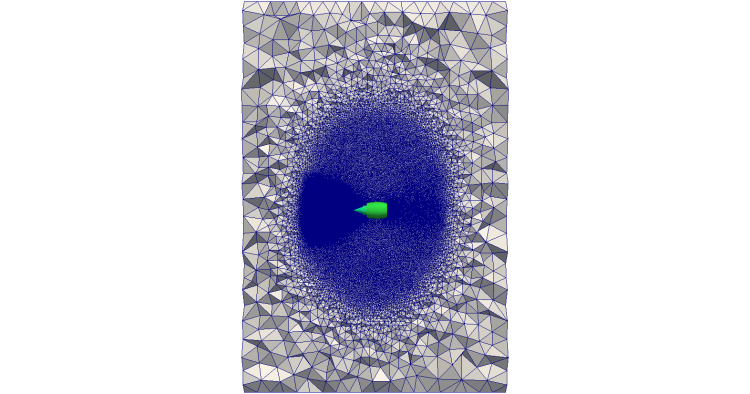
(a) CDT3D: 42.85 M tetrahedra -
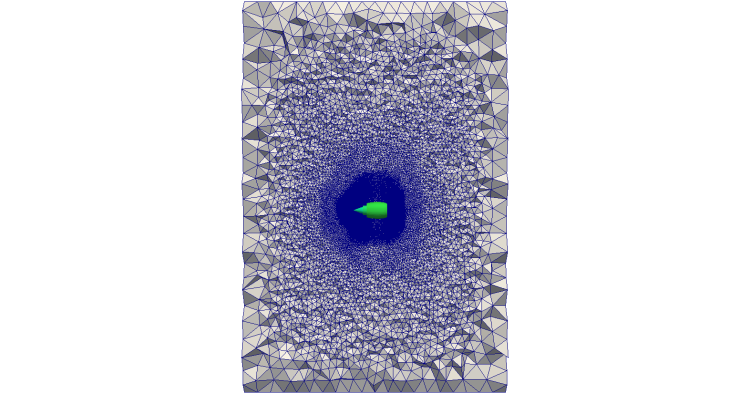
(b) AFLR: 39.64 M tetrahedra


- Tetrahedral field cuts of the aircraft nacelle


- Detail views of tetrahedral field cuts of aircraft nacelle generated with CDT3D
-
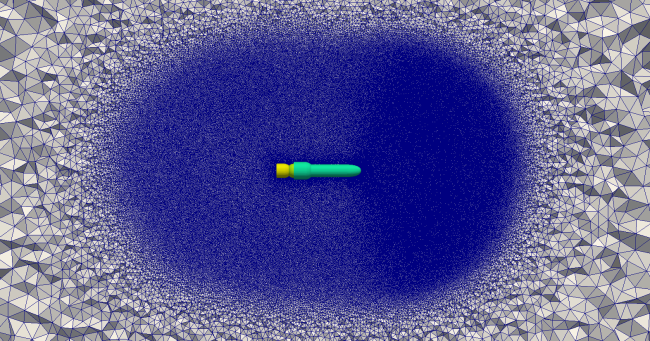
(a) CDT3D: 119.06 M tetrahedra -
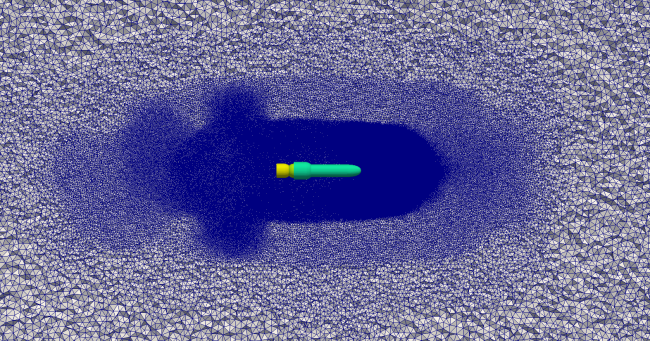
(b) AFLR: 127.68 M tetrahedra


-
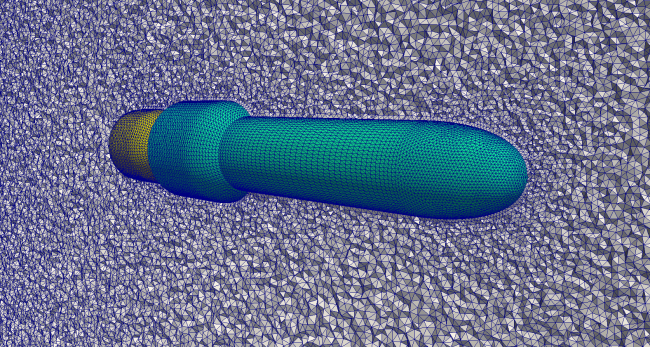
(c) Detail view of (a) -
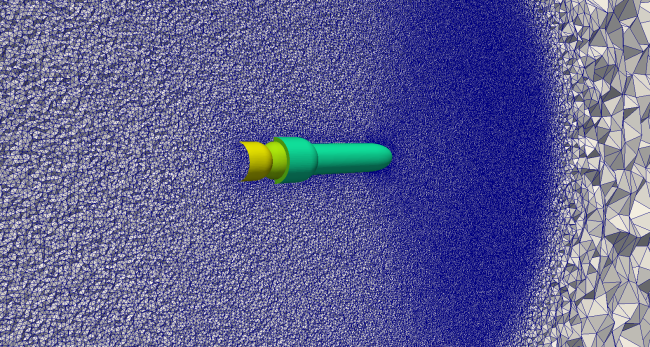
(d) Detail view of (a)


- Tetrahedral field cuts of the rocket
-
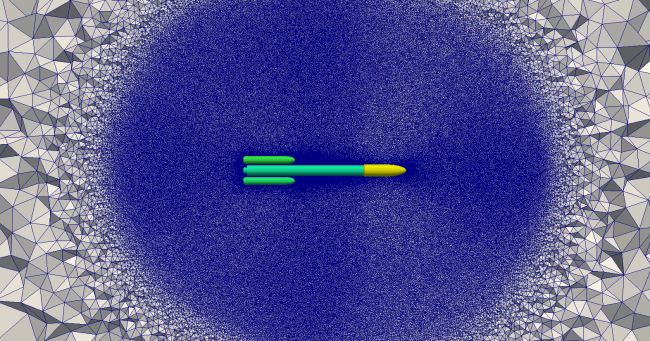
(a) CDT3D: 110.01 M tetrahedra -
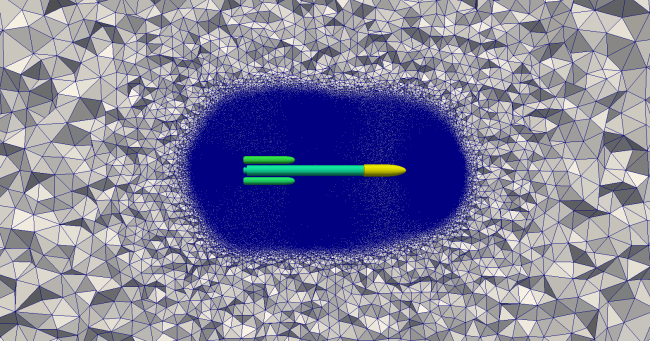
(b) AFLR: 100.92 M tetrahedra


-
(c) Detail view of (a) -
(d) Detail view of (a)


- Tetrahedral field cuts of the Lv2b
-
(a) w/o improvement -
(b) w/ improvement


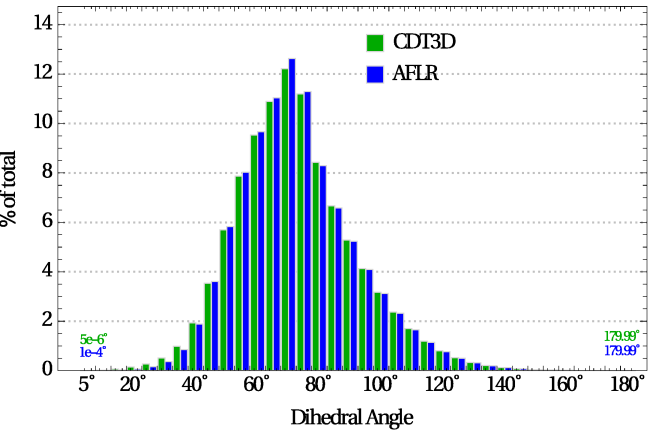
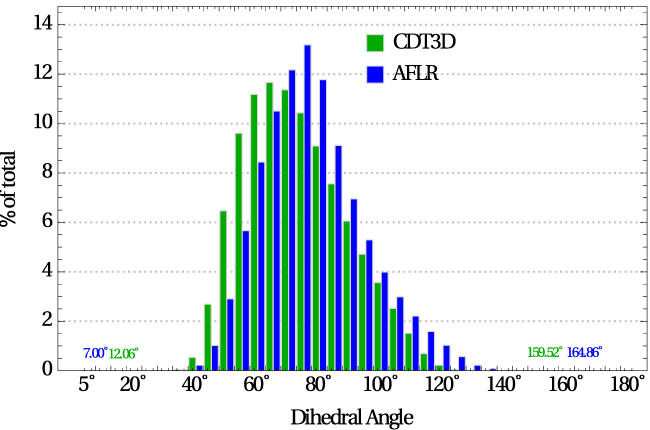
- Element angle distribution (in 5-deg increments) of aircraft nacelle grids. The dihedral angle extrema are reported for each method.
-
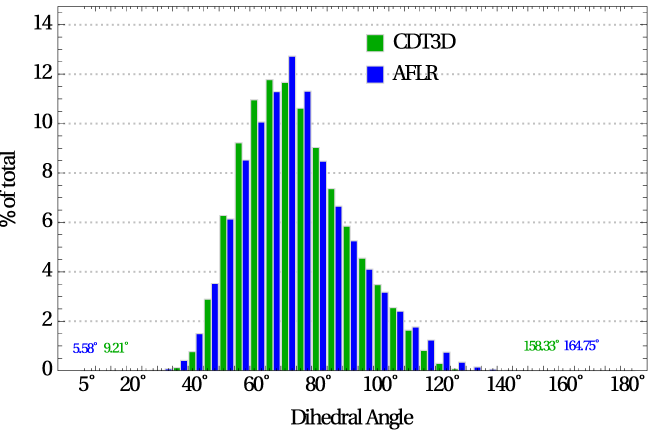
(a) Rocket (w/ improvement) -
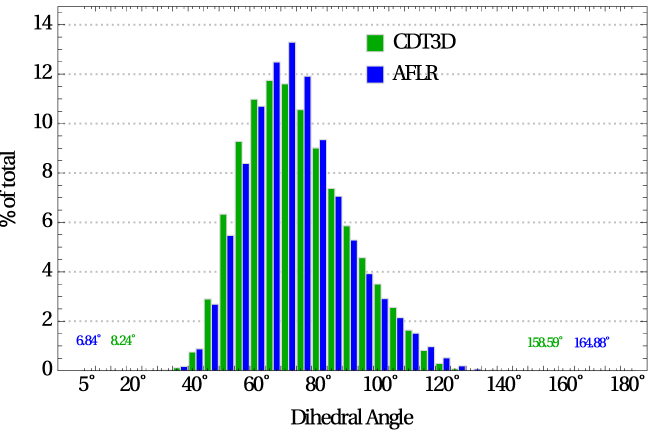
(b) Lv2b (w/ improvement)


- Element angle distribution (in 5-deg increments) after improvement of Rocket and Lv2b grids. The dihedral angle extrema are reported for each method.
-
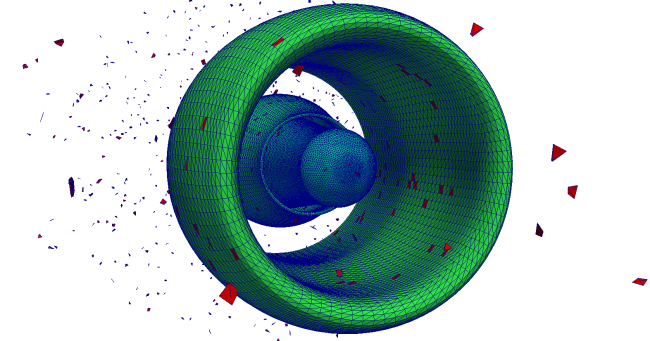
(a) CDT3D: 1590 slivers (0.0037%) out of total 42.91 M tetrahedra -
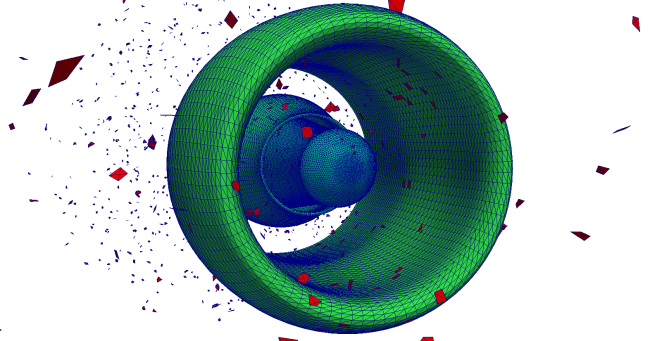
(b) AFLR: 1287 slivers (0.0029%) out of total 43.23 M tetrahedra


- Slivers after the completion of refinement of the aircraft nacelle. Red represents elements whose minimum dihedral angle is smaller than 2◦ or larger than 178◦.